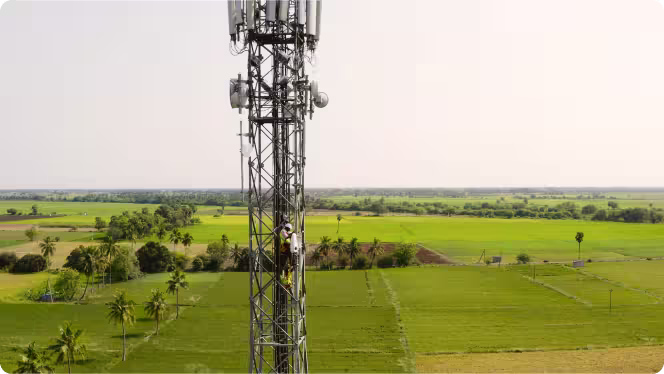


Fast, affordable connectivity using beams of light
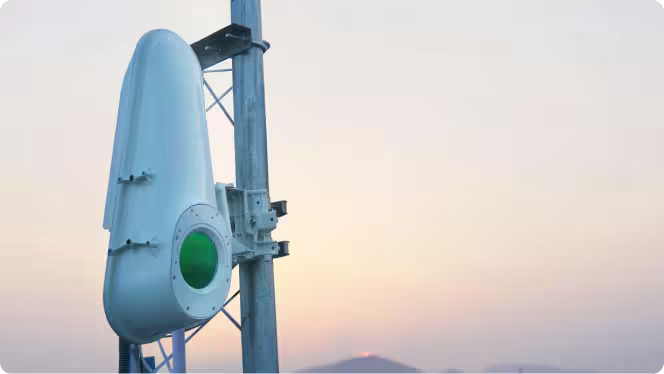
Taara overview
Next Generation Wireless Optical Communication
Taara utilizes Wireless Optical Communication (WOC), a line-of-sight technology, to deliver high-speed, high-capacity connectivity over long distances. Like fiber, but without the cables, Taara’s technology relies on the optical spectrum to transmit information through the air as narrow, invisible beams.
Taara links can be used to rapidly extend high-capacity networks from a fiber point of presence without the time, cost, and hassle involved in digging or stringing fiber along poles. With no right of way costs, signal interference, or spectrum licenses, Taara offers a cost-effective way to bring high-speed connectivity to the world.
- 1
Quick deployment
- Can be installed and uninstalled in less than a day
- Easy to transport and requires limited support equipment
- May be mounted on poles, towers, or rooftops
- 2
Connectivity across difficult terrain
- Sites located around water bodies
- Forested region
- Railway tracks and dense urban areas
- 3
No right of way permits
- No right of way permits or spectrum license
- Data is transmitted wirelessly with Class 1M eye-safe lasers in the unlicensed infrared band ( 193 THz)
- 4
Cost competitive & easy to integrate
- Significantly favorable economics on a cost per GB/km compared to traditional alternatives
- Based on open standards to work with existing infrastructure
Features & benefits
- 20 Gbps bidirectional throughput
- Up to 20 km operating range
- Energy efficient (40W power consumption per unit)
- Low environmental impact without the need to dig
- Low total cost of ownership compared to traditional radio antennas
- Rapid deployments and redeployments with low weight and wind load
Use cases
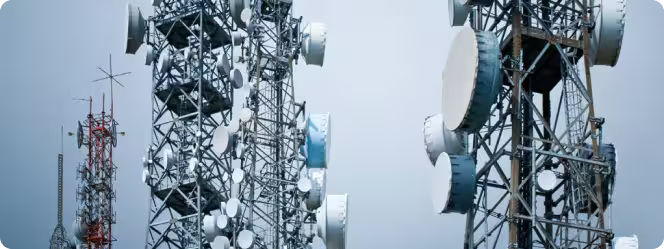
High bandwidth backhaul
- Extend fiber capacity
- Augment radio capacity
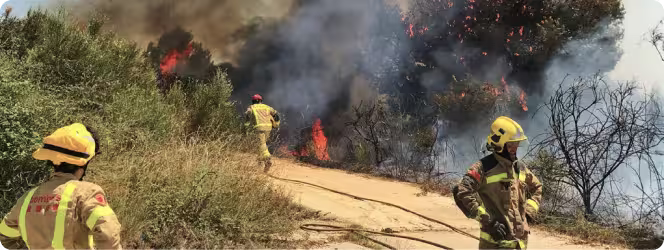
Improve network resilience
- Backup to fiber
- Disaster recovery

Urban last-mile extension
- High-rise multi-dwelling residence
- Universities, hospitals, enterprises
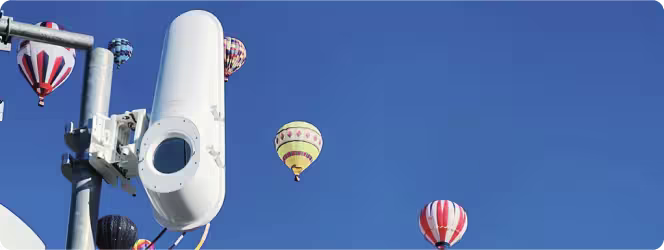
Rapid deployment & redeployment
- Connectivity to crowded events
- Test new markets
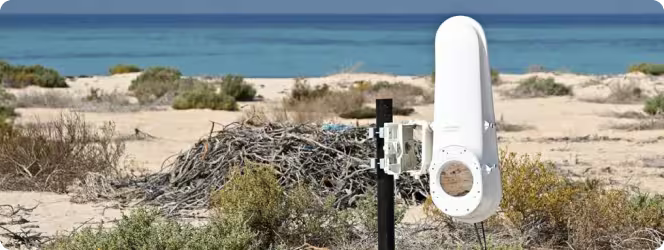
Bridge challenging terrain
- Water body crossing
- Fiber islands

Secure data transmission
- Low probability of interference
- Low probability of detection
How it works
The speed of fiber, the flexibility of wireless
In the same way that traditional fiber uses light to carry data through cables in the ground, Taara Lightbridge uses light to transmit information at speeds as high as 20 gigabits per second and distances up to 20 km. Taara Lightbridge consists of two terminals containing mirrors and sensors that point, acquire, and track beams of light, ensuring they remain on target. Even if a tower sways due to wind, or a bird flies through the laser path, our technology ensures uninterrupted communication.
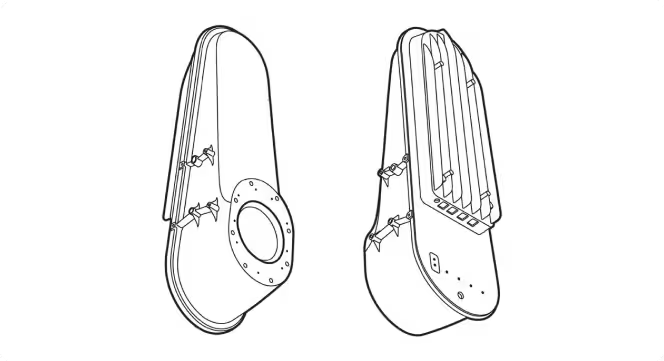
Front and back
By extending our customer’s fiber optic networks, Taara Lightbridge can relay fast and abundant internet to places where it’s not practical or economically viable to deploy fiber.
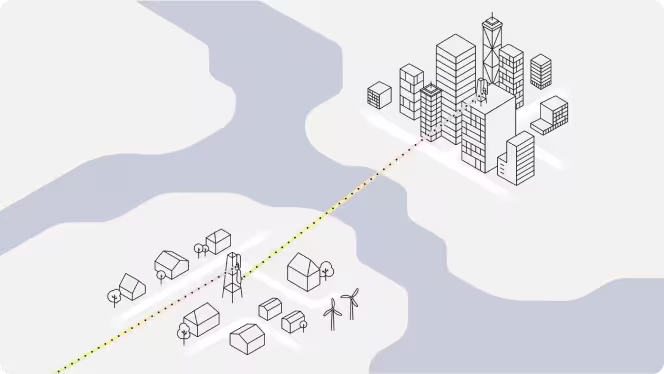
Data sheet
Terminal specifications
| Parameter | Value |
| Throughput | 20 Gbps full-duplex |
| Range | 400 m to 20 km |
| Latency | Minimum latency (processing delay) < 160 μs; Mean latency < 5 ms |
| Dimentions | 220 mm x 240 mm x 750 mm |
| Weight | 13 kg |
| Regulatory compliance | IEC 62368-1, 60950-22, FCC 15.b, EN 300 386 |
Power specifications
| Parameter | Value |
| Power consumption | 40 W typical; 60 W maximum |
| Power connections | ± 38 to ± 58 V; ± 48 V DC (nominal) or PoE++ (UPoE) |
Environmental specifications
| Parameter | Value |
| Operating temperature range (ambient) | -20 to 55°C (Can operate at up to 65° solar loading) |
| Storage temperature range (ambient) | -40 to 85 °C |
| Relative humidity | 5 – 100% |
Laser specifications
| Parameter | Value |
| Classification | Class 1M (eye safe) |
| Maximum output power | 30 dBm |
| Wavelength range | 1535 – 1565 nm |
| Regulatory compliance | IEC 60825-1, 60825-12, 21CFR Part 1040 |