


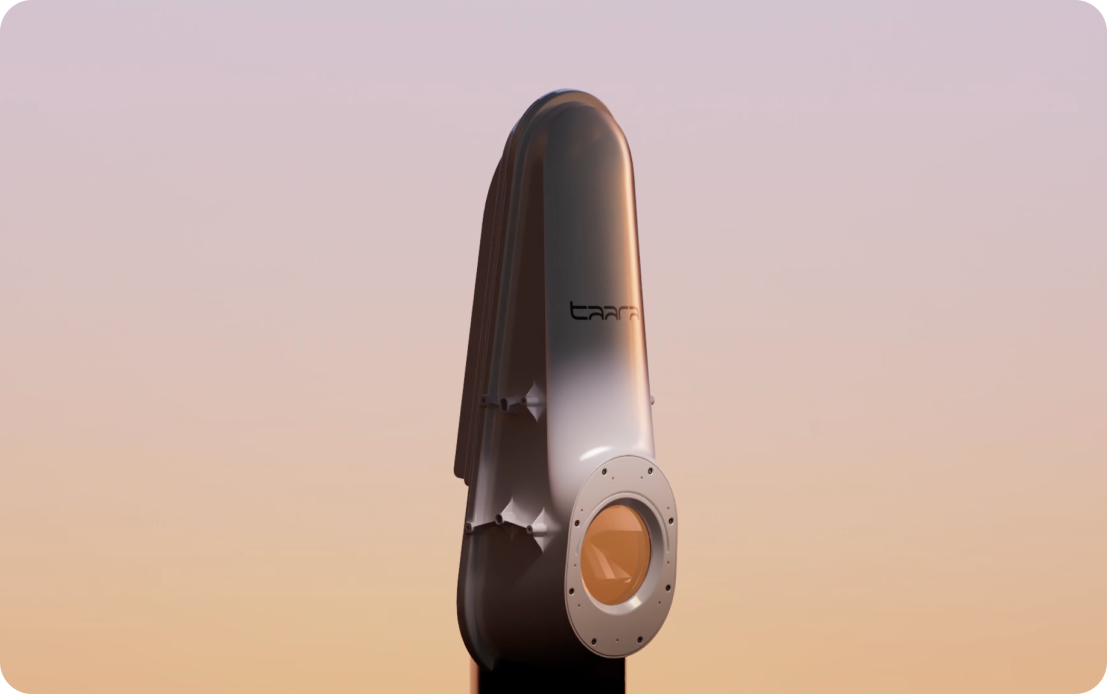
Lightbridge Mounting Overview
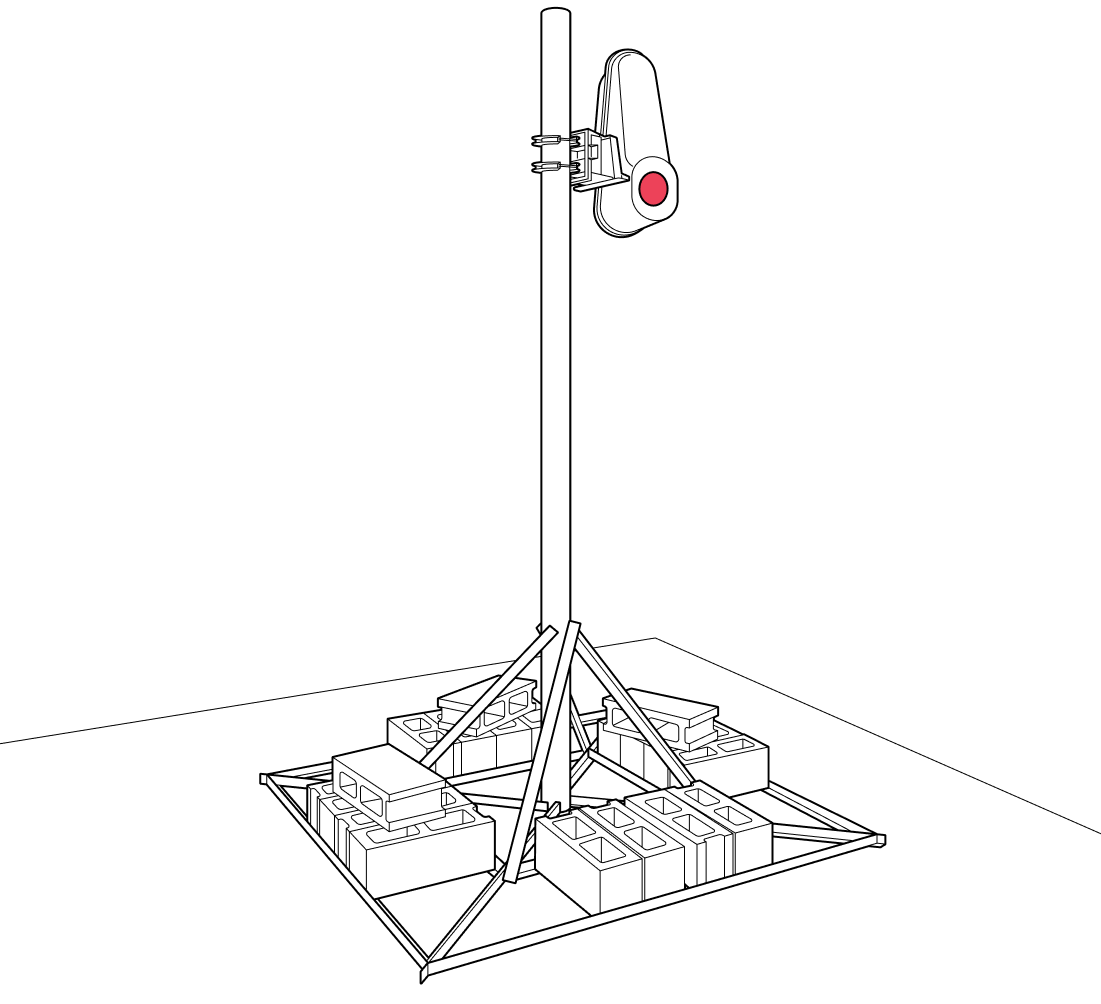
- 1
Lightbridge terminal
- 2
Lightbridge mounting bracket
- 3
Dedicated pole
- 4
Wide base with weight to minimize movement
Overview
A well-selected and properly installed mount is crucial for Taara Lightbridge to demonstrate optimal performance. Unlike radio frequency (RF) equipment, which can tolerate some movement, wireless optical communication (WOC) requires a stable platform free of mechanical vibrations to maintain a reliable connection.
Narrow optical beams, designed for high-capacity data transmission, also require a 100% clear line of sight (LoS) between the two terminals.
Criteria for Successful Mounting of Taara Lightbridge
For a mount to be suitable for mounting Taara Lightbridge, it must meet several key criteria:
1. Stability
The mount must be sturdy and rigid. Each Lightbridge terminal weighs 13 kg and has a tolerance of up to ±3 degrees. Excessive sway can cause service interruptions.
2. Vibration-Free
The structure should not be susceptible to mechanical vibrations caused by equipment such as AC vents or motors. Vibrations can introduce micro-movements that disrupt the optical link.
3. Dedicated Pole
The terminal should be mounted on a dedicated pole or bracket. Attaching it to a pole or bracket that holds additional equipment can introduce unwanted vibrations and instability.
4. Proper Dimensions
The outer diameter (OD) of the vertical mounting pole must be within the specified range of 2.0 to 4.5 inches.
Mounting Best Practices
- Use a bracket with short arms that mounts the WOC terminal close to the structure to eliminate “bounce”.
- Use a bracket or mount to a structure that is thick gauge galvanized material.
- Mount on the inner bracket or pole when possible.
- Mount on a dedicated bracket - do not mount with other equipment.
- Double check that all fasteners are secure.
Recommended Mount Types
Rooftop Mounts
Non-penetrating mounts are an excellent option for installing Taara Lightbridge on building rooftops. These mounts use weights, like concrete blocks, to secure the pole without drilling into the roof's surface. This approach ensures stability while minimizing impact on the building.
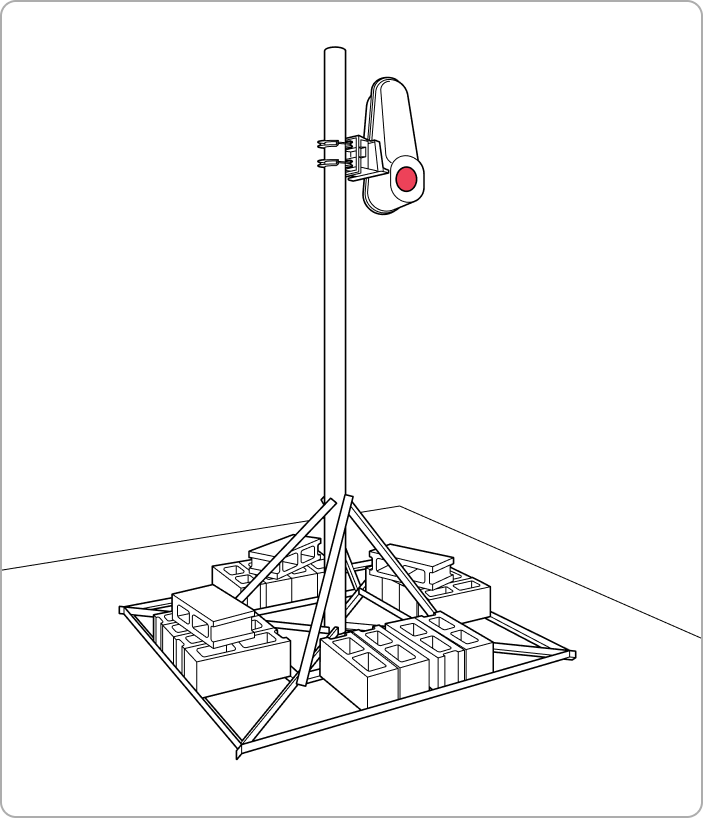
Good example of a rooftop non-penetrating mount
Tower Mounts
Towers are suitable for mounting Taara Lightbridge, provided they are structurally stable and free of vibrations. The Lightbridge pole mount can be attached to the tower or a structure bracket, as long as the vertical mounting pole's outer diameter (OD) falls within 2.0 to 4.5 inches.
When installed on a tower, a dedicated pole is used to ensure stability and isolate the terminal from other equipment on the structure.
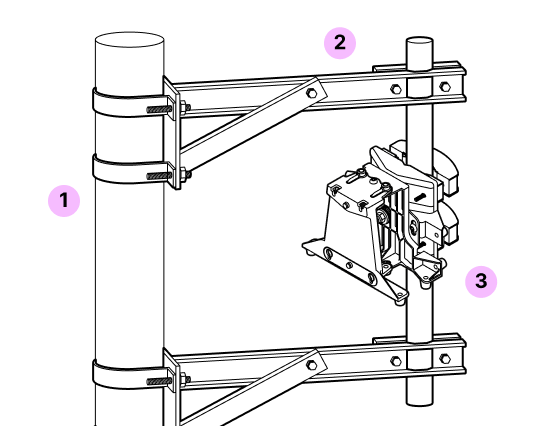
Good example of a structure OK to Mount
- 1
Structurally stable tower free of vibrations
- 2
Structure bracket approved for Taara Lightbridge. Vertical pole between 2.0 and 4.5 inches in diameter.
- 3
Mounting bracket for Taara Lightbridge
Telco tower mounts that are OK to mount
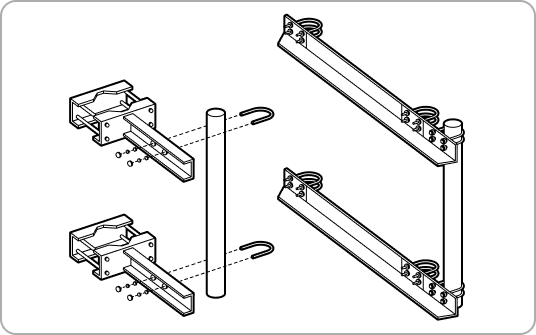
Tower brackets
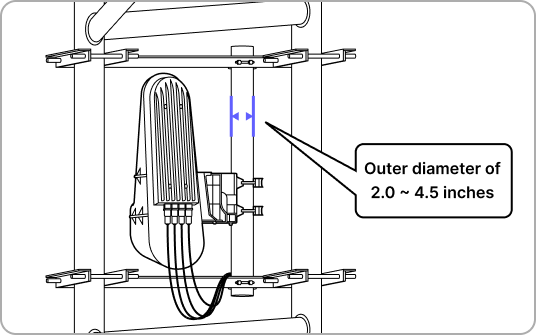
OD of 2.0 ~ 4.5 inches
This is an illustration of a dedicated pole mount on a telco tower
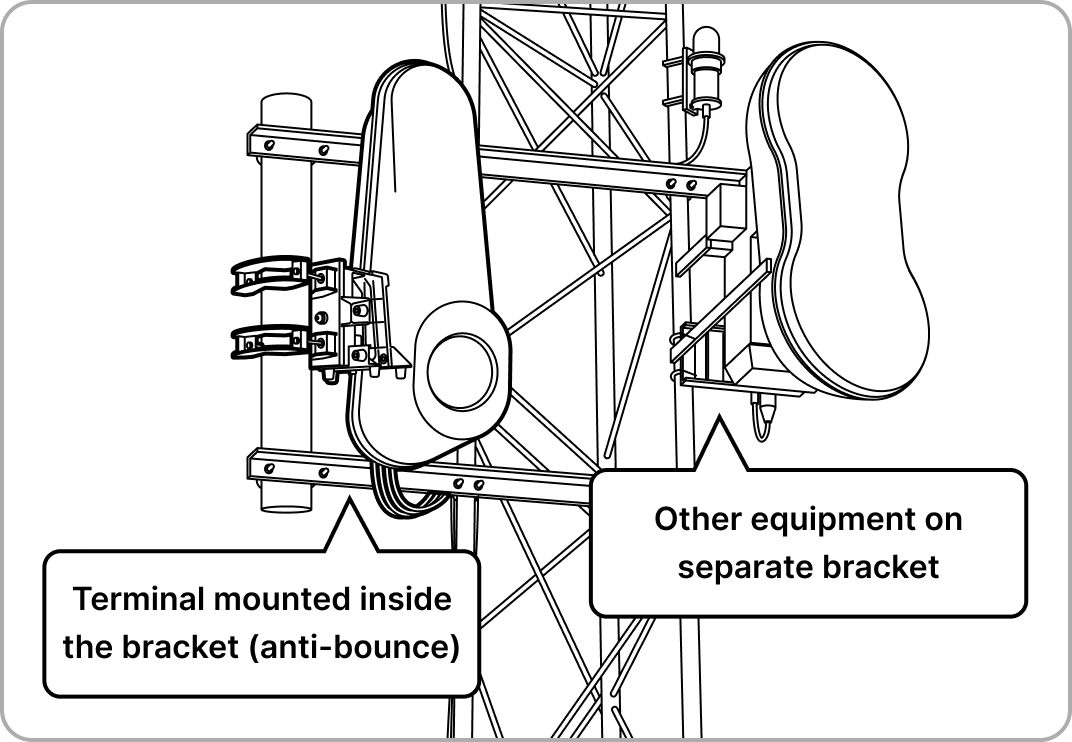
Dedicated pole mount on a telco tower
Examples of a dedicated pole mount for a lattice towers:
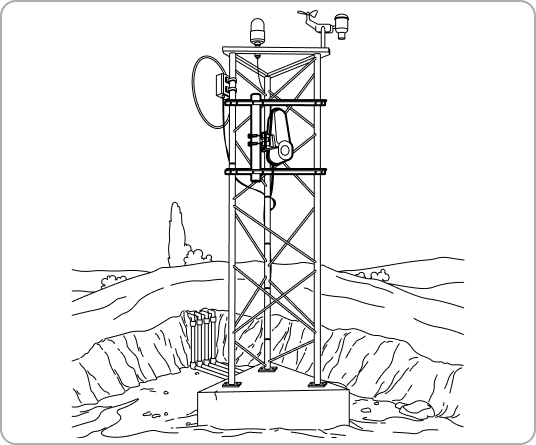
3M mast installation
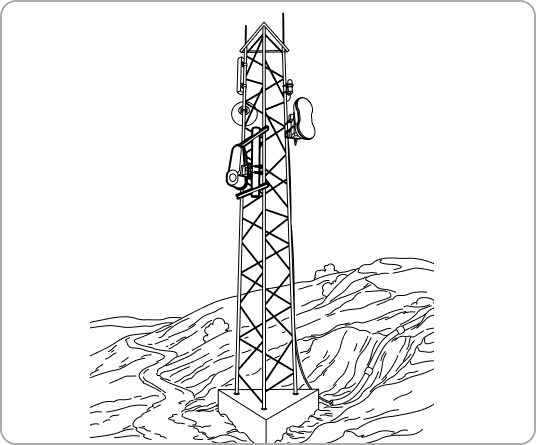
6M mast installation
Wall Mounts
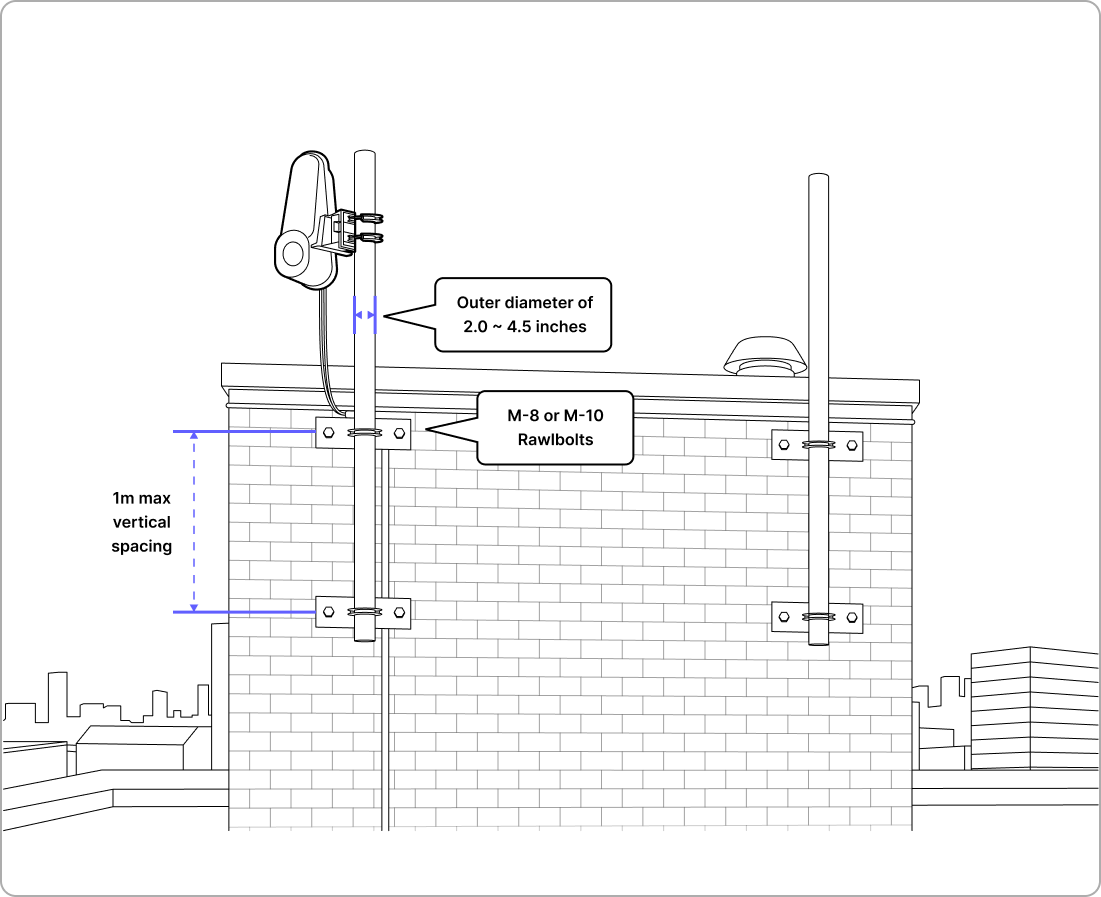
For wall-mounted installations, poles with an outer diameter of 2.0 to 4.5 inches are suitable and the monopole must be dedicated to mounting Taara Lightbridge. Two or more metal wall braces must be secured to the wall using M-8 or M-10 Rawlbolts spaced within 1m apart vertically.
When selecting a mounting location, consider potential line-of-sight obstructions. These could include tall trucks or haulers if mounted on a street, or daily people activity from an adjacent building.
Examples of Suboptimal Mounts and Why They Fail
Mounts that introduce movement or mechanical vibration are not suitable for Taara Lightbridge and can lead to poor link performance. For example, installing the terminal on a flimsy monopole or a non-dedicated pole can cause performance issues. If the pole sways even slightly due to wind or other factors, the optical link will be interrupted.
Here are examples of suboptimal mounts and why they fail:
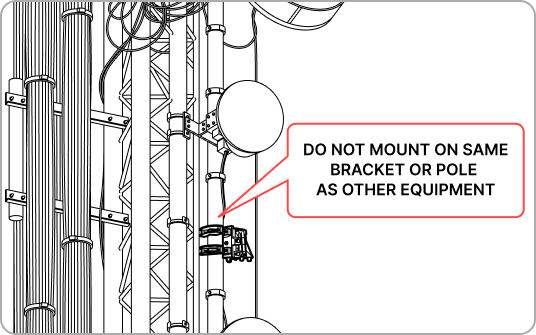
Avoid mounting on towers with additional equipment
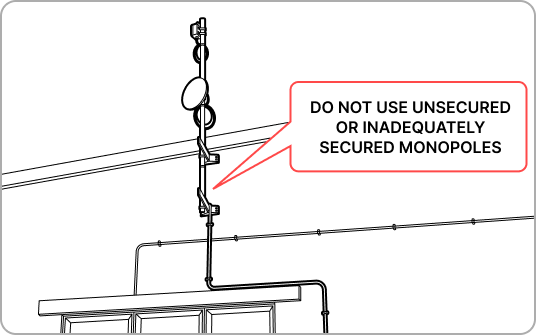
Avoid mounting on unsecured monopoles
Why link performance suffers
The extremely narrow optical beams of Taara Lightbridge require a highly focused, precise connection. Unlike RF systems, which have wider beams and can still maintain connection with some physical movement, Taara Lightbridge requires precise alignment between the two terminals. Especially when the mount is unstable, avoid using poles that are not dedicated to the optical terminal. Attaching the terminal to a pole that also holds other antennas or equipment can cause link instability.